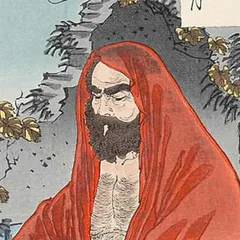
Bodhidharma
Bodhidharma Quotes about Nature
To find a Buddha all you have to do is see your nature.
To find Buddha, you have to see your nature. Whoever sees his nature is a Buddha. If you don't see your nature, invoking buddhas, reciting sutras, making offerings, and keeping precepts are all useless. Invoking buddhas results in good karma, reciting sutras results in a good memory, keeping precepts results in good rebirth, and making offerings results in future blessings-but no Buddha.
Unless you see your nature, you shouldn't go around criticizing the goodness of others. There's no advantage in deceiving yourself. Good and bad are distinct. Cause and effect are clear. But fools don't believe and fall straight into a hell of endless darkness without even knowing it. What keeps them from believing is the heaviness of their karma. They're like blind people who don't believe there's such a thing as light. Even if you explain it to them, they still don't believe, because they're blind. How can they possibly distinguish light?
If you know that everything comes from the mind, don't become attached. Once attached, you're unaware. But once you see your own nature, the entire Canon becomes so much prose. It's thousands of sutras and shastras only amount to a clear mind. Understanding comes in midsentence. What good are doctrines? The ultimate Truth is beyond words. Doctrines are words. They're not the Way. The Way is wordless. Words are illusions. . . . Don't cling to appearances, and you'll break through all barriers. . . .
If you see your nature, you don't need to read sutras or invoke buddhas. Erudition and knowledge are not only useless but also cloud your awareness. Doctrines are only for pointing to the mind. Once you see your mind, why pay attention to doctrines?
Our true buddha-nature has no shape. And the dust of affliction has no form.
But this mind isn't somewhere outside the material body of the four elements. Without this mind we can't move. The body has no awareness. Like a plant or a stone, the body has no nature. So how does it move? It's the mind that moves.
Unless you see your nature, all this talk about cause & effect is nonsense. Buddhas don't practice nonsense.
To enter by reason means to realize the essence through instruction and to believe that all living things share the same true nature, which isn't apparent because it's shrouded by sensation and delusion.
The Buddha is your real body, your original mind. This mind has no form or characteristics, no cause or effect, no tendons or bones. It's like space. You can't hold it. It's not the mind of materialists or nihilists. If you don't see your own miraculously aware nature, you'll never find a Buddha, even if you break your body into atoms.
People who don't see their own nature and imagine they can practice thoughtlessness all the time are liars and fools.
This one life has no form and is empty by nature. If you become attached by any form, you should reject it. If you see an ego, a soul, a birth, or a death, reject them all.
Once you see your nature, sex is basically immaterial.
The true Way is sublime. It can't be expressed in language. Of what use are scriptures? But someone who sees his own nature finds the Way, even if he can't read a word.