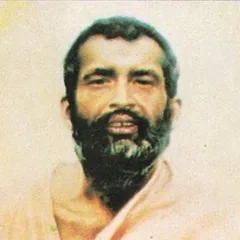
Ramakrishna
Ramakrishna Quotes about Brahman
What Brahman is cannot be described. All things in the world — the Vedas, the Puranas, the Tantras, the six systems of philosophy — have been defiled, like food that has been touched by the tongue, for they have been read or uttered by the tongue. Only one thing has not been defiled in this way, and that is Brahman. No one has ever been able to say what Brahman is.
Right discrimination is of two kinds: analytical and synthetical. The first leads one from the phenomena to the Absolute Brahman, while by the second one knows how the Absolute Brahman appears as the universe.
The rishis of old attained the Knowledge of Brahman. One cannot have this so long as there is the slightest trace of worldliness. How hard the rishis laboured ! Early in the morning they would go away from the hermitage, and would spend the whole day in solitude, meditating on Brahman. At night they would return to the hermitage and eat a little fruit or roots. They kept their mind aloof from the objects of sight, hearing, touch, and other things of a worldly nature. Only thus did they realize Brahman as their own inner consciousness.
Brahman is beyond mind and speech, beyond concentration and meditation, beyond the knower, the known and knowledge, beyond even the conception of the real and unreal. In short, It is beyond all relativity.
Different people call on [God] by different names: some as Allah, some as God, and others as Krishna, Siva, and Brahman. It is like the water in a lake. Some drink it at one place and call it 'jal', others at another place and call it 'pani', and still others at a third place and call it 'water'. The Hindus call it 'jal', the Christians 'water', and the Moslems 'pani'. But it is one and the same thing.