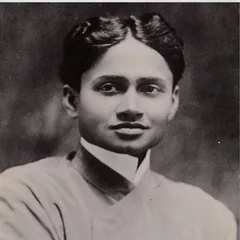
Swami Paramananda
Swami Paramananda Quotes about God
The Hereafter does not shine before those who are lacking in the power of discrimination and are easily carried away therefore by the charm of fleeting objects. As children are tempted by toys, so they are tempted by pleasure, power, name and fame. To them these seem the only realities. Being thus attached to perishable things, they come many times under the dominion of death. There is one part of us which must die; there is another part which never dies. When a man can identify himself with his undying nature, which is one with God, then he overcomes death.
The Sages gave to the Supreme the name A-U-M which stands as the root of all language. The first letter ‘A’ is the mother-sound, being the natural sound uttered by every creature when the throat is opened, and no sound can be made without opening the throat. The last letter ‘M,’ spoken by closing the lips, terminates all articulation. As one carries the sound from the throat to the lips, it passes through the sound ‘U.’ These three sounds therefore cover the whole field of possible articulate sound. Their combination is called the Akshara or the imperishable word, the Sound-Brahman or the Word God, because it is the most universal name which can be given to the Supreme.
He who perceives the Self everywhere never shrinks from anything, because through his higher consciousness he feels united with all life. When a man sees God in all beings and all beings in God, and also God dwelling in his own Soul, how can he hate any living thing? Grief and delusion rest upon a belief in diversity, which leads to competition and all forms of selfishness. With the realization of oneness, the sense of diversity vanishes and the cause of misery is removed.
Who is better able to know God than I myself, since He resides in my heart and is the very essence of my being? Such should be the attitude of one who is seeking.