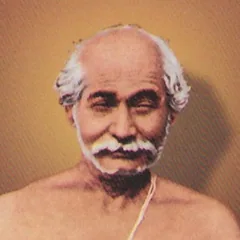
Lahiri Mahasaya
Lahiri Mahasaya Quotes about Mind
Nobody is a sinner; no one is holy either; if the mind is put into the Kutastha, then, there is no sin; otherwise, if the mind is outward, there is sin; in other words, when the mind is not in the Kutastha, it is in sin.
Avidya, ignorance, is the outward state of mind; Bidya, Knowledge, is the After-effect-poise of Kriya.
When the mind is tranquil, it does not desire unnecessarily. At the state of beyond desire, one does not perform unnecessary works.
Mind should not be made outward. What's the benefit if the mind and the eyes are tranquil and not the body? Today, the breath does not come out, and a lot of addictions are generated.
That which saves one from the mind (restless breath), or manasa, is called Mantra; that which saves one from the attachment of body is called Tantra.
I saw a pure Void, that is Brahma, the ultimate Self. The mind must be dissolved in It.
Nobody is a sinner; the mind itself is the sinner when it becomes outward away from the Kutastha.
One can see all the deities if one withdraws the restless mind and makes inward himself in the Kutastha.
Beyond the five senses there is mind, that is breath; beyond the mind there is buddhi, that is bindu, or spot (in between the eyebrows); beyond the bindu, Brahma, the ultimate Self, is the Pure Void, and Formless.
Applying body, mind, and speech in action is called Ahingsa (Non-violence).