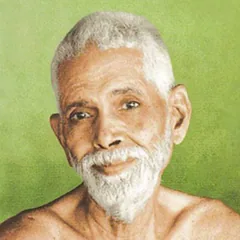
Ramana Maharshi
Ramana Maharshi Quotes about Mind
The mind of one meditating on a single object becomes one-pointed. And one-pointedness of mind leads to abidance in the self. Real attainment is to be fully conscious, to be aware of surroundings and the people around, to move among them all, but not to merge consciousness in the environment. One should remain in inner independent awareness.
From where does this "I" arise? Seek for it within; it then vanishes. This is the pursuit of wisdom. When the mind unceasingly investigates its own nature, it transpires that there is no such thing as mind. This is the direct path for all. The mind is merely thoughts. Of all thoughts the thought "I" is the root.
If one watches whence the notion 'I' arises, the mind gets absorbed there; that is tapas. When a mantra is repeated, if one watches whence that mantra sound arises, the mind gets absorbed there; that is tapas.
An unawakened person sees only his mind, which is merely a reflection of the light of pure consciousness arising from the Heart.
Peace can reign only where there is no disturbance, and disturbance is due to thoughts that arise in the mind.
The Sage has no thinking mind and therefore there are no ‘others’ for him.
Happiness is your real nature. You identify with yourself with the body and mind, feel its limitations, and suffer. Realize your true self in order to open the store of happiness. That true self is the reality, the Supreme Truth, which is the self of all the world you now see, the self of all the selves, the One real, the Supreme, the Eternal self - as distinct from the ego or the bodily idea for the self.
Mind is but a poor reflection of the radiant Heart.
Meditation depends upon the strength of mind. It must be unceasing even when one is engaged in work. Particular time for it is meant for novices.
Meditation helps concentration of the mind. Then the mind is free from thoughts and is in the meditated form.
Yogas chitta vritti nirodhah - (Yoga is to check the mind from changing) - which is acceptable to all. That is also the goal of all. The method is chosen according to one's own fitness. The goal for all is the same. Yet different names are given to the goal only to suit the process preliminary to reaching the goal. Bhakti, Yoga, Jnana are all the same.
Meditation applies the brakes to the mind.
When we turn the mind inwards, God manifests as the inner consciousness.
The life of action need not be renounced. If you meditate for an hour or two every day you can then carry on with your duties. If you meditate in the right manner then the current of mind induced will continue to flow even in the midst of your work.
The deeply learned ones know the mind as the directly expressed meaning of the supreme knowledge. The heart is the meaning aimed at. The Supreme is none other than the heart.
Every living being longs always to be happy, untainted by sorrow; and everyone has the greatest love for himself, which is solely due to the fact that happiness is his real nature. Hence, in order to realize that inherent and untainted happiness, which indeed he daily experiences when the mind is subdued in deep sleep, it is essential that he should know himself. For obtaining such knowledge the inquiry 'Who am I?' in quest of the Self is the best means.
In truth, you are spirit. The body has been projected by the mind, which itself originates from Spirit.
The mind is only a bundle of thoughts. The thoughts have their root in the I-thought. Whoever investigates the True "I" enjoys the stillness of bliss.
God illumines the mind and shines within it. One cannot know God by means of the mind. One can but turn the mind inwards and merge it in God.
The fact is that the mind is only a bundle of thoughts. The mind is fattened by new thoughts rising up. Therefore it is foolish to attempt to kill the mind by means of the mind. The only way of doing it is to find its source and hold on to it. The mind will then fade away of its own accord.
Pleasure and pain are only aspects of the mind. Our essential nature is happiness.
When one makes the mind stick to one thought, the mind becomes rock-steady and the energy is conserved.
If the mind falls asleep, awaken it. Then if it starts wandering, make it quiet. If you reach the state where there is neither sleep nor movement of mind, stay still in that, the natural (real) state.
The Self is the heart, self-luminous. Illumination arises from the heart and reaches the brain, which is the seat of the mind. The world is seen with the mind; so you see the world by the reflected light of the Self.
If one's mind has peace, the whole world will appear peaceful.