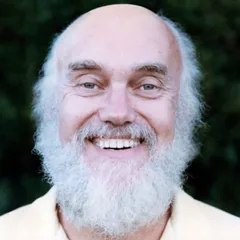
Ram Dass
Ram Dass Quotes about Life
I would like my life to be a statement of love and compassion--and where it isn't, that's where my work lies.
You've been somebody long enough. You spent the first half of your life becoming somebody. Now you can work on becoming nobody, which is really somebody. For when you become nobody there is no tension, no pretense, no one trying to be anyone or anything. The natural state of the mind shines through unobstructed - and the natural state of the mind is pure love.
We live life in the marketplace and then we go off to the cave or to the meditation mat to replenish ourselves.
I would say that the thrust of my life has been initially about getting free, and then realizing that my freedom is not independent of everybody else. Then I am arriving at that circle where one works on oneself as a gift to other people so that one doesn't create more suffering. I help people as a work on myself and I work on myself to help people.
The offering up or cleaning up ego stuff is called purification. Purification is the act of letting go. This is done out of discriminative awareness. That is, you understand that you are an entity passing through a life in which the entire drama is an offering for your awakening.
As I've gone into soul and soul-land, and I connect with my soul and my ego, and my life is colored by my soul - people can identify from their ego, which is who they thought they are. The soul, which is who they really are, if they choose that transfer to the soul, then you live in an ocean of love.
The healing begins when we can start to feel more gratitude that our child came into our life than despair and outrage that our child died. The gratitude is what heals the despair.
My life is a creative act--like a painting, or a concerto.
Everything in your life is there as a vehicle for your transformation. Use it!
You must come to see every human being Including yourself, As an incarnation In a body or personality, going through a certain Life experience which is functional.
The art of life is to stay wide open and be vulnerable, yet at the same time to sit with the mystery and the awe and with the unbearable pain - to just be with it all.
I see my life as an unfolding set of opportunities to awaken.
The way we regard death is critical to the way we experience life. When your fear of death changes, the way you live your life changes.
Without remaining open to change, we cannot remain open to life.
After meditating for some years, I began to see the patterns of my own behavior. As you quiet your mind, you begin to see the nature of your own resistance more clearly, struggles, inner dialogues, the way in which you procrastinate and develop passive resistance against life. As you cultivate the witness, things change. You don't have to change them. Things just change.
Our journey is about being more deeply involved in life, and yet less attached to it.
I think the question is, how do we live with change? Change in our friends, change in our lovers? Change in me and change in my body, from the stroke. Things have changed this plane of consciousness. We've tried to keep things the same. It causes suffering. This suffering is another step in your spiritual life, in your spiritual journey.
When I look at my life, I see that I wanted to be free of the physical plane, the psychological plane, and when I got free of those I didn't want to go anywhere near them.
Wisdom is one of the few things in human life that does not diminish with age.
There's much more in any given moment than we usually perceive, and that we ourselves are much more than we usually perceive. When you know that, part of you can stand outside the drama of your life.
There is a larger frame to the painting than the one that bounds our life's events.
At first you think that your sadhana is a limited part of your life. In time you realize that everything you do is part of your sadhana.
The dark night of the soul is when you have lost the flavor of life but have not yet gained the fullness of divinity. So it is that we must weather that dark time, the period of transformation when what is familiar has been taken away and the new richness is not yet ours.
When you look back at your own life, you see ... the sufferings you went through, each time you would have avoided it if you possibly could. And yet, when you look at the depth of your character now, isn't a part of that a product of those experiences? Weren't those experiences part of what created the depth of your inner being?