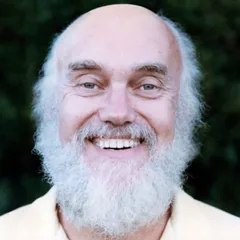
Ram Dass
Ram Dass Quotes about Time
It is possible that in the 21st Century the Earth will not be inhabited by humans. One of the great mystics of India, a very simple man up in the mountains, somebody once asked him about the future. He said there will come a time when you'll walk five miles and you may see a light and you'll be so happy to know another being exists.
The soul is not ruled by time and space. The soul is infinite. It blends with the One in infinity.
Ask yourself: Where am I? Answer: Here. Ask yourself: What time is it? Answer: Now. Say it until you can hear it.
Learn to watch your drama unfold while at the same time knowing you are more than your drama.
You have all the time in the world, but don't waste a moment.
The art of life is to stay wide open and be vulnerable, yet at the same time to sit with the mystery and the awe and with the unbearable pain - to just be with it all.
We're receiving information from all the planes of our consciousness all the time, but we don't acknowledge their existence; we treat the information as static, as noise.
When the faith is strong enough, it is sufficient just to be. Its a journey towards simplicity, towards quietness, towards a kind of joy that is not in time. Its a journey that has taken us from primary identification with our body and our psyche, on to an identification with God, and ultimately beyond identification.
When we're identified with Awareness, we're no longer living in a world of polarities. Everything is present at the same time.
The richness of a moment comes when it's both full and empty at the same time. The truth is, we live simultaneously in time and timelessness.
The heart surrenders everything to the moment. The mind judges and holds back. In most of our human relationships, we spend much of our time reassuring one another that our costumes of identity are on straight. When we see the Beloved in each person, it's like walking through a garden, watching flowers bloom all around us.
Be patient. You'll know when it's time for you to wake up and move ahead.
The final awakening is the embracing of the darkness into the light. That means embracing our humanity as well as our divinity. What we go from is being born into our humanity, sleep walking for a long time, until we awaken and start to taste our divinity. And then want to finally get free. We see as long as we grab at our divinity and push away our humanity we aren’t free. If you want to be free, you can’t push away anything. You have to embrace it all. It’s all God.
In most of our human relationships, we spend much of our time reassuring one another that our costumes of identity are on straight.
You see that who you are isn't moving in time. Time is describing the incarnations, the packing changes.
At first you think that your sadhana is a limited part of your life. In time you realize that everything you do is part of your sadhana.
Along with faith comes the requirement for dogged persistence. At first meditation may bring you mild highs or some relief from suffering. But there may come a time - just as there does in the development of any skill - when there will be a plateau. You may be bored, discouraged, or even negative and cynical. This is when you will need not only faith, but persistence.
The dark night of the soul is when you have lost the flavor of life but have not yet gained the fullness of divinity. So it is that we must weather that dark time, the period of transformation when what is familiar has been taken away and the new richness is not yet ours.
When you look back at your own life, you see ... the sufferings you went through, each time you would have avoided it if you possibly could. And yet, when you look at the depth of your character now, isn't a part of that a product of those experiences? Weren't those experiences part of what created the depth of your inner being?