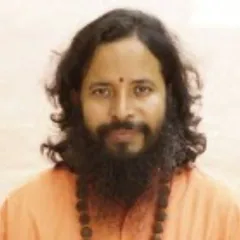
Paramahamsa Prajnanananda
Paramahamsa Prajnanananda Quotes about Karma
Suppose a soccer match is played between Germany and the Netherlands. During a soccer match, you can see the excitement from people in both countries. Although it is the karma of twenty-two players, eleven from each team, it affects the lives ofs. One year I happened to be in the Netherlands when a soccer tournament was in progress. I was at the airport wearing my orange monk’s attire. Suddenly two men who worked in the airport restaurant looked at me and shouted, “Holland! Holland!” (Orange is the color of the national soccer team of the Netherlands). I smiled and said, “India…I’m from India.” They both laughed and said, “India has a great orange color.” The karma of a few people can affect many.
If we are prisoners, how do we free ourselves? How long must we remain in prison? With steadfast determination we must achieve the true spirit of freedom through proper contemplation, proper thinking, and right action and living. Otherwise, lifetime after lifetime we will remain bound by our karma.
How do we preplan our bodies and our lives? Through our own karma. Every moment we do something, then the impression of that karma remains within us. The sum total of these karmic impressions directs us where to go and what to do. For example, going to a spiritual retreat was an aggregation of karma. First, the thought appeared; perhaps someone told you about it. Then the desire to go was manifest. Next you planned how to have a holiday from work, how to arrange money, how to travel, and what clothes you needed. You had to perform many karmas for just one desire, and the sum total of that karma and the aggregation of the planning is called prakalpita, pre-thought or previously planned.
Through our karma we made some plans and acquired a body. We arrived in this world decorated with beautiful ornaments. What are the ornaments? It is said, anadi vasana malah: “You have a garland, a necklace, made of desires without beginning.” Vasana means “desires” and anadi means “without beginning”; thus, we have a beautiful necklace of desires without beginning as well as endless ambition. But this garland is not new. Anadimeans that from time immemorial we have been carrying the vasanas, the desires, life after life.
After realization, whether a jnani takes another body is up to them, because he or she has no remaining karma. First, seekers must decide whether they want realization. Then they must ask themselves why they want to be realized. Realization means to be free. Free from what? Free from all suffering: duhkha nivritti. If someone is free from all suffering, what happens? Eternal bliss. If the goal is to achieve eternal bliss by being free from suffering, whether a realized one returns or not, if they are in a state of bliss, does it matter if they stay or leave?
Divine, but differences in human nature such as variation in happiness, misery, riches, intelligence, success, and failure are the result of karma and nothing else.
How long do we wish to continue this drama, this play of karma, this play of emotion, anger, jealousy, fear, frustration, and worry? We choose whether we want to continue the drama a little longer. Gurudev liked to use the expression, “The world is the play of kiss and kick.” This world is full of suffering, but little pleasure. A little sweetness, lots of sourness. Gurudev used to call it a “sugar-coated bitter tablet.”
The first part of the verse says, ittham prakalpite dehe: “in this body that was planned before birth by you,” planned by your own karma. Jiva vasati sarvagah: “the individual who is worthy, capable, of going everywhere.” After contemplating these words, should we doubt our situation in life? We plan our lives before birth, as well as our bodies, our environments, and our situations and circumstances. Therefore, we should accept our situation and graciously assume our responsibilities.