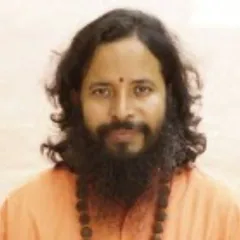
This revered spiritual teacher is known for his emphasis on the practical application of spiritual principles and his dedication to the path of self-realization. His teachings often focus on integrating ancient spiritual wisdom with contemporary practices, making profound spiritual concepts accessible and relevant to modern seekers. Through his guidance, many have explored deeper dimensions of their own consciousness and achieved greater clarity and fulfillment in their spiritual journey. His approach is marked by a commitment to personal growth and a deep understanding of the transformative power of spiritual practices, inspiring individuals to pursue a path of inner harmony and self-discovery.
Even though the gopis had obeyed, they still had much doubt. How did the river part if what they were saying was not the truth? Indeed, the answer is that it was all a matter of “doership.” If your mind says, “I have done it,” you must receive the result of your action. But remember, it is crucial to understand that “doership” comes from the inside, not by saying it with the mouth. If one has the state of knowledge that all work is being done by the body and the senses, one is free from the consequences.
Remember, if you are not self-motivated, others' persuasion or pressure will not work.
How do we preplan our bodies and our lives? Through our own karma. Every moment we do something, then the impression of that karma remains within us. The sum total of these karmic impressions directs us where to go and what to do. For example, going to a spiritual retreat was an aggregation of karma. First, the thought appeared; perhaps someone told you about it. Then the desire to go was manifest. Next you planned how to have a holiday from work, how to arrange money, how to travel, and what clothes you needed. You had to perform many karmas for just one desire, and the sum total of that karma and the aggregation of the planning is called prakalpita, pre-thought or previously planned.