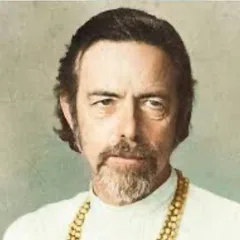
Alan Watts
Alan Watts Quotes about Secret
To perceive that form reveals the void, and to see that the void reveals form, is the secret for the overcoming of death. To the extent that one is unaware of space, one is unaware of one's own eternity — it's the same thing!
For the perfect accomplishment of any art, you must get this feeling of the eternal present into your bones - for it is the secret of proper timing. No rush. No dawdle. Just the sense of flowing with the course of events in the same way that you dance to music, neither trying to outpace it nor lagging behind. Hurrying and delaying are alike ways of trying to resist the present.
This is the real secret of life -- to be completely engaged with what you are doing in the here and now. And instead of calling it work, realize it is play.
Take a deep breath and tell us your deepest, darkest secret, so we can wipe our brow and know that we're not alone.
Nothing is more creative than death, since it has the whole secret of life. It means that the past must be abandoned, that the unknown cannot be avoided, that 'I' cannot continue, and that nothing can be ultimately fixed. When a man knows this, he lives for the first time in his life. By holding his breath, he loses it. By letting go he finds it.
The secret of the enjoyment of pleasure is to know when to stop. Man doesn't learn this secret easily, but to shun pleasure altogether is cowardly avoidance of a difficult job. For we have to learn the art of enjoying things BECAUSE they are impermanent.