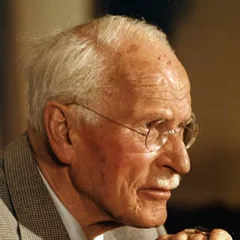
Carl Jung
Carl Jung Quotes about Consciousness
Man's unconscious... contains all the patterns of life and behaviour inherited from his ancestors, so that every human child, prior to consciousness, is possessed of a potential system of adapted psychic functioning.
The only thing that really matters now is whether man can climb up to a higher moral level, to a higher plane of consciousness, in order to be equal to the superhuman powers which the fallen angels have played into his hands. But he can make no progress until he becomes very much better acquainted with his own nature.
Conflict exists strictly as an opportunity to raise our consciousness.
The mind has grown to its present state of consciousness as an acorn grows into an oak, or as saurians developed into mammals.
An inflated consciousness is always egocentric and conscious of nothing but its own existence. It is incapable of learning from the past, incapable of understanding contemporary events, and incapable of drawing right conclusions about the future. It is hypnotized by itself and therefore cannot be argued with. It inevitably dooms itself to calamities that must strike it dead.
It is just man's turning away from instinct--his opposing himself to instinct--that creates consciousness. Instinct is nature and seeks to perpetuate nature; while consciousness can only seek culture or its denial.
The difference between the "natural" individuation process, which runs its course unconsciously, and the one that is consciously realized is tremendous. In the first case, consciousness nowhere intervenes; the end remains as dark as the beginning. In the second case, so much darkness comes to light that the personality is permeated with light and consciousness necessarily gains in scope and insight. The encounter between conscious and unconscious has to ensure that the light that shines in the darkness is not only comprehended by the darkness, but comprehends it.
There is no birth of consciousness without pain.
The upheaval of our world and the upheaval of our consciousness are one and the same.
The dream is a little hidden door in the innermost and most secret recesses of the soul, opening into that cosmic night which was psyche long before there was any ego-consciousness, and which will remain psyche no matter how far our ego-consciousness extends.