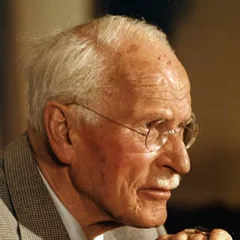
Carl Jung
Carl Jung Quotes about People
People will do anything, no matter how absurd, in order to avoid facing their own souls. They will practice Indian yoga and all its exercises, observe a strict regimen of diet, learn the literature of the whole world - all because they cannot get on with themselves and have not the slightest faith that anything useful could ever come out of their own souls.
I have frequently seen people become neurotic when they content themselves with inadequate or wrong answers to the questions of life
People cannot stand too much Reality.
At present we educate people only up to the point where they can earn a living and marry; then education ceases altogether, as though a complete mental outfit had been acquired. ... Vast numbers of men and women thus spend their entire lives in complete ignorance of the most important things.
People will do anything, no matter how absurd, to avoid facing their own souls.
It seems to be very hard for people to live with riddles or to let them live, although one would think that life is so full of riddles as it is that a few more things we cannot answer would make no difference. But perhaps it is just this that is so unendurable, that there are irrational things in our own psyche which upset the conscious mind in its illusory certainties by confronting it with the riddle of its existence.
Fortunately, in her kindness and patience, Nature has never put the fatal question as to the meaning of their lives into the mouths of most people. And where no one asks, no one needs to answer.
We are convinced that certain people have all the bad qualities we do not know in ourselves.
Whenever there is a reaching down into innermost experience, into the nucleus of personality, most people are overcome by fear and many run away. . . The risk of inner experience, the adventure of the spirit, is in any case alien to most human beings. The possibility that such experience might have psychic reality is anathema to them.
Anthropologists have often described what happens to a primitive society when its spiritual values are exposed to the impact of modern civilisation. Its people lose the meaning of their lives, their social organisation disintegrates, and they themselves morally decay. We are now in the same condition. But we have never really understood what we have lost, for our spiritual leaders unfortunately were more interested in protecting their institutions than in understanding the mystery that symbols present.