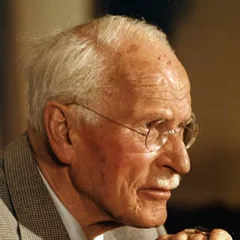
Carl Jung
Carl Jung Quotes about Existence
Not only does the psyche exist, but it is existence itself. It is an almost absurd prejudice to suppose that existence can only be physical... We might well say, on the contrary, that physical existence is a mere inference, since we know of matter only in so far as we perceive psychic images mediated by the senses.
A sense of a wider meaning to one's existence is what raises a man beyond mere getting and spending. If he lacks this sense, he is lost and miserable
It seems to be very hard for people to live with riddles or to let them live, although one would think that life is so full of riddles as it is that a few more things we cannot answer would make no difference. But perhaps it is just this that is so unendurable, that there are irrational things in our own psyche which upset the conscious mind in its illusory certainties by confronting it with the riddle of its existence.
An inflated consciousness is always egocentric and conscious of nothing but its own existence. It is incapable of learning from the past, incapable of understanding contemporary events, and incapable of drawing right conclusions about the future. It is hypnotized by itself and therefore cannot be argued with. It inevitably dooms itself to calamities that must strike it dead.
It seems as if it is only through an experience of symbolic reality that man, vainly seeking his own “existence”
The great problems of life — sexuality, of course, among others — are always related to the primordial images of the collective unconscious. These images are really balancing or compensating factors which correspond with the problems life presents in actuality. This is not to be marveled at, since these images are deposits representing the accumulated experience of thousands of years of struggle for adaptation and existence.