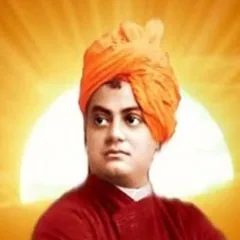
A key figure in the introduction of Indian philosophies to the Western world. He is renowned for his speeches at the Parliament of the World's Religions in 1893, where he spoke on the universality of spirituality and the importance of religious tolerance. His teachings emphasized the need for personal spiritual development and the idea of serving humanity as a form of worship. He played a crucial role in the revival of Hinduism and the promotion of Vedanta philosophy globally. His work inspired many to explore spiritual and philosophical thought.
Every little bit, every atom inside the universe, is in a constant state of change and motion, but the universe as a whole is unchangeable, because motion or change is a relative thing; we can only think of something in motion in comparison with something which is not moving.
It is the subjective world that rules the objective. Change the subject, and the object is bound to change; purify yourself, and the world is bound to be purified.
All objective pleasure in the long run must bring pain, because of the fact of change or death.
Every change is being forced upon us.
It is the free alone which never changes, and the unchangeable alone which is free; for change is produced by something exterior to a thing, or within itself, which is more powerful than the surroundings.