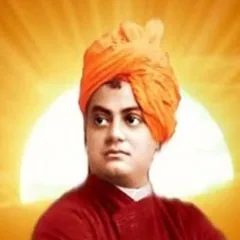
A key figure in the introduction of Indian philosophies to the Western world. He is renowned for his speeches at the Parliament of the World's Religions in 1893, where he spoke on the universality of spirituality and the importance of religious tolerance. His teachings emphasized the need for personal spiritual development and the idea of serving humanity as a form of worship. He played a crucial role in the revival of Hinduism and the promotion of Vedanta philosophy globally. His work inspired many to explore spiritual and philosophical thought.
Renunciation - non-resistance - non-destructiveness - are the ideals to be attained through less and less worldliness, less and less resistance, less and less destructiveness. Keep the ideal in view and work towards it. None can live in the world without resistance, without destruction, without desire. The world has not come to that state yet when the ideal can be realised in society.
We must travel; we must go to foreign parts. We must see how the engine of society works in other countries, and keep free and open communication with what is going on in the minds of other nations, if we really want to be a nation again.
Wherever in any society there are too many laws, it is a sure sign that that society will soon die. If you study the characteristics of India, you will find that no nation possesses so many laws as the Hindus, and national death is the result.
Man stands in materialism; you and I are materialists. Our talking about God and Spirit is good; but it is simply the vogue in our society to talk thus: we have learnt it parrot-like and repeat it.