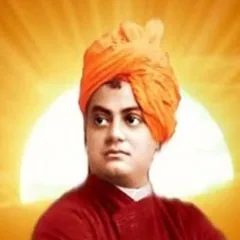
A key figure in the introduction of Indian philosophies to the Western world. He is renowned for his speeches at the Parliament of the World's Religions in 1893, where he spoke on the universality of spirituality and the importance of religious tolerance. His teachings emphasized the need for personal spiritual development and the idea of serving humanity as a form of worship. He played a crucial role in the revival of Hinduism and the promotion of Vedanta philosophy globally. His work inspired many to explore spiritual and philosophical thought.
You know your real nature [to be divine]. You are the king and play you are a beggar. . . . It is all fun. Know it and play. That is all there is to it. Then practice it. The whole universe is a vast play.
We must patiently practice every day.
My children, the secret of religion lies not in theories but in practice.
We have to practice to become perfect.
Unselfishness is more paying, only people have not the patience to practice it.
Gita and Ganga constitute the essence of Hinduism; one its theory and the other its practice.
One ounce of practice is worth a thousand pounds of theory.
We see many persons talking the most wonderfully fine things about charity and about equality and the rights of other people and all that, but it is only in theory. I was so fortunate as to find one who was able to carry theory into practice. He had the most wonderful faculty of carrying everything into practice which he thought was right.